Making detergent delivery part of the scrubbing motion.
This cordless handheld scrubber was part of a broader push into battery-powered cleaning tools. My work centered on developing and prototyping a valve that used the physical pressure applied while scrubbing to dispense a detergent, without adding a pump or separate controls. Although my usual efforts are (generally) adjacent to embedded software, I was really fortunate in that my role gave me room to take on ambiguous challenges regardless of where they led.
The fluid path problem
A major feature of the scrubber itself was its quickly removable cleaning heads. Adding a dispensing system with a pump, tubing, extra buttons, etc. felt like a massive overcomplication and in a lot of cases an unnecessary add-on.
The general idea was to use the pressure the user was already applying while scrubbing to dispense detergent, without requiring any additional buttons or controls.
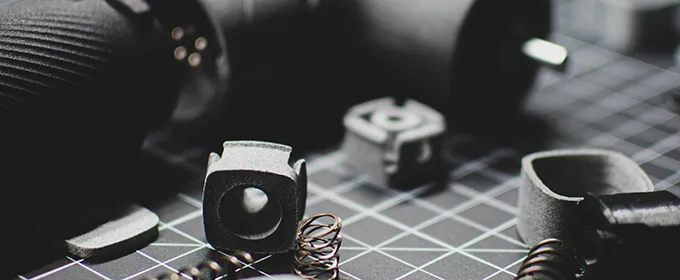
Designing the valve
The approach was on a small spring-loaded shuttle valve integrated into the detergent tank. As the user pressed the tool against a surface, the cleaning head would move just slightly relative to the tank, actuating the valve and releasing detergent that was stored in the chamber. A slight offset from the centerline would allow centrifugal force to help move the fluid outward but not enough to spray it all over.
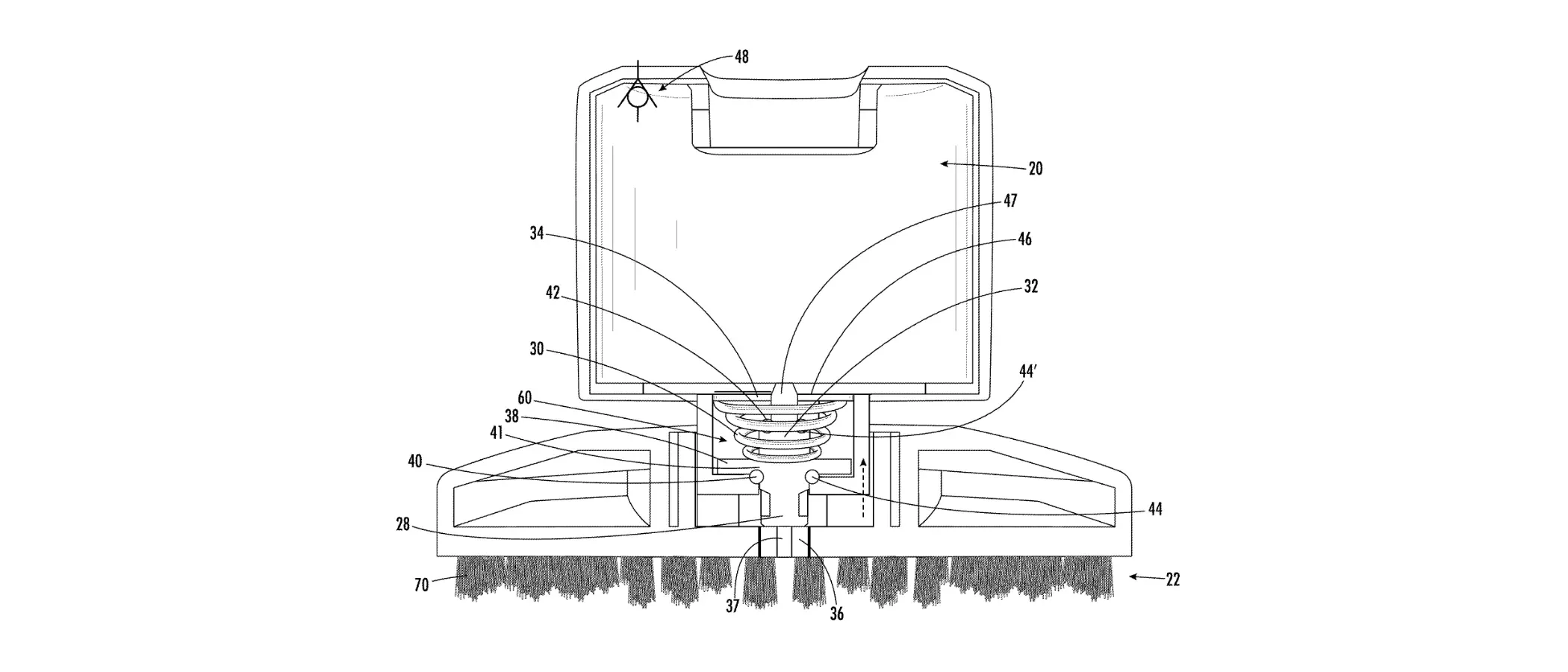
At rest the valve needed to reliably seal the outlet to prevent leaking. When pressed, it needed to close the inlet from the tank, preventing detergent from continuously flowing through the cleaning head. Balancing seal compliance to ensure both positions sealed reliably was particularly tricky in early prototyping.
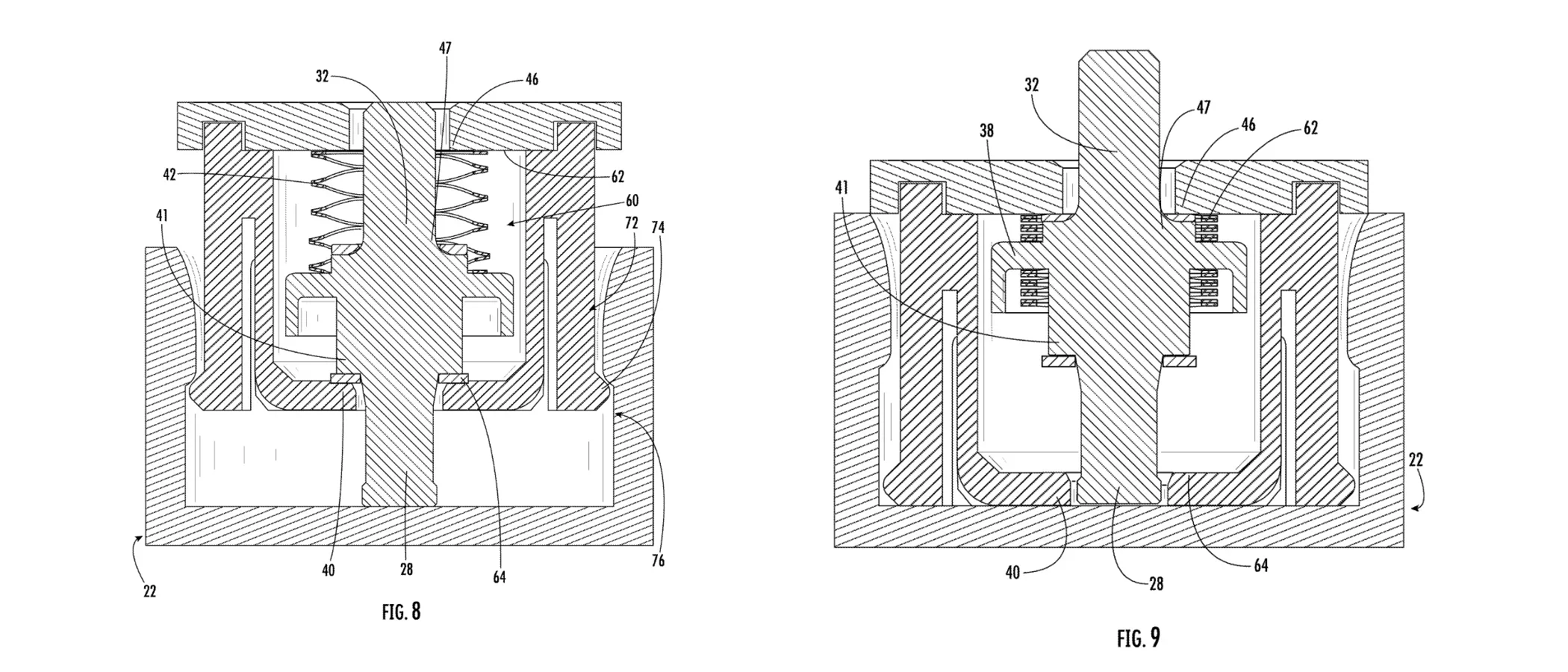
At rest the valve seals the outlet and when pressed it closes off the tank.
The small chamber between these two sealing surfaces effectively became a metering system. Each press would release a small amount of detergent, while releasing the pressure allowed the spring to return the valve and refill the chamber for the next press.
Getting the spring force, travel distance, and sealing surfaces to work together took most of the effort. Fortunately, the scrubber was powerful, so the valve actuated naturally during cleaning without the user consciously pressing on it.
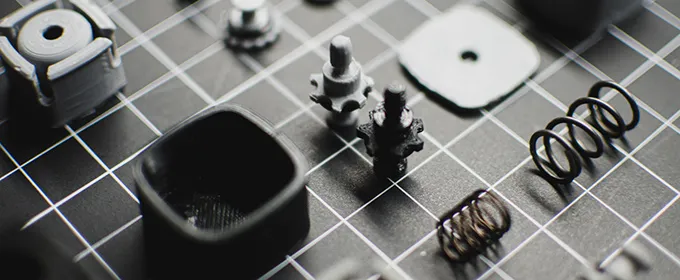
The result
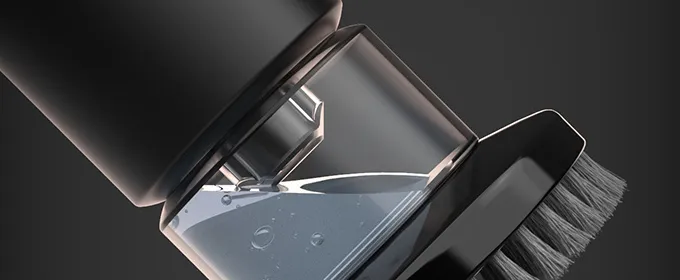
Early concept rendering showing the transparent tank scubber attachement.
It allowed the user to swap cleaning heads quickly, kept the overall size of the tool reasonable, and eliminated the need for a second motor and pump. I left TTI before development was complete and this covers my contribution through the prototyping stage, but the completed design was a relatively simple co-moldable valve and spring assembly integrated into the detergent tank that worked in a surprisingly intuitive and ‘automatic’ kind of way.